Portfolio / E-commerce
E-commerce
Great stores reduce friction between wanting and buying — discovery, trust signals, and a checkout that never gets in the way.
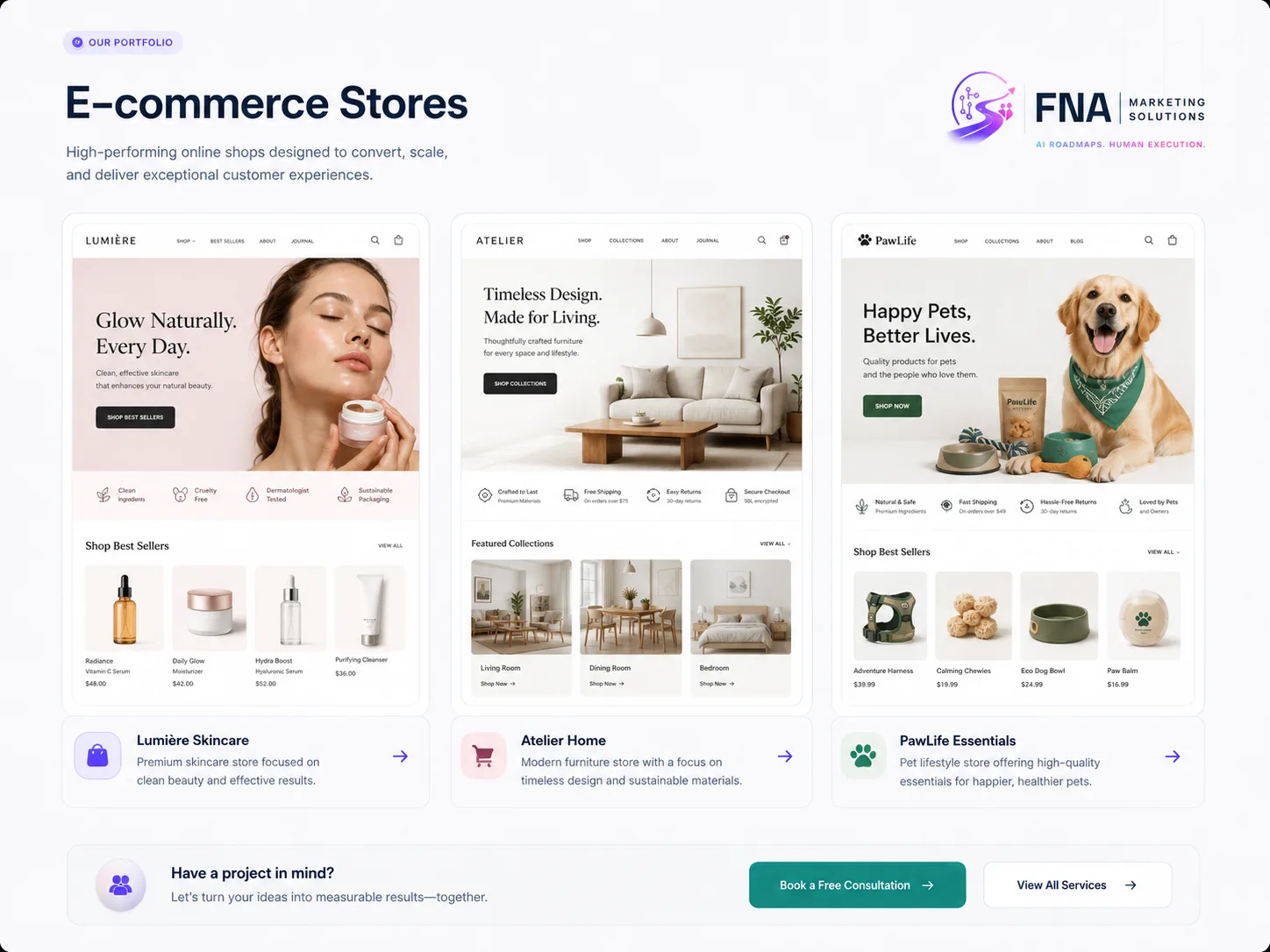
Selected concept work demonstrating the types of digital experiences we can plan and build. Final strategy, design, features, scope, timeline, and pricing are tailored to each client.
Concept directions
 Concept Project
Premium Skincare Store
An editorial-feel store where ingredient trust and routine-building drive larger baskets.
View concept →
 Concept Project
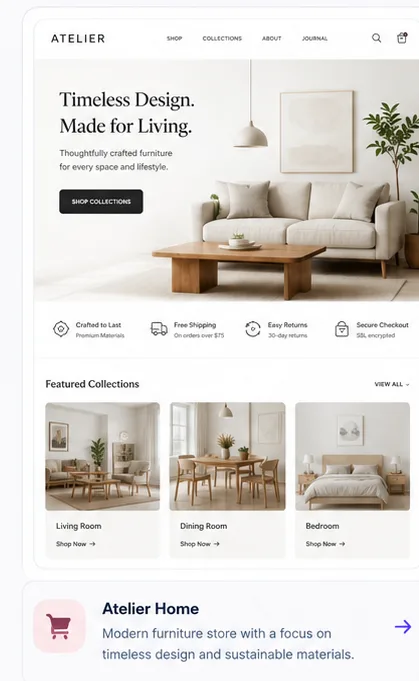
Modern Furniture Store
A visual-first store handling variants, delivery logistics, and high-consideration buying.
View concept →
 Concept Project
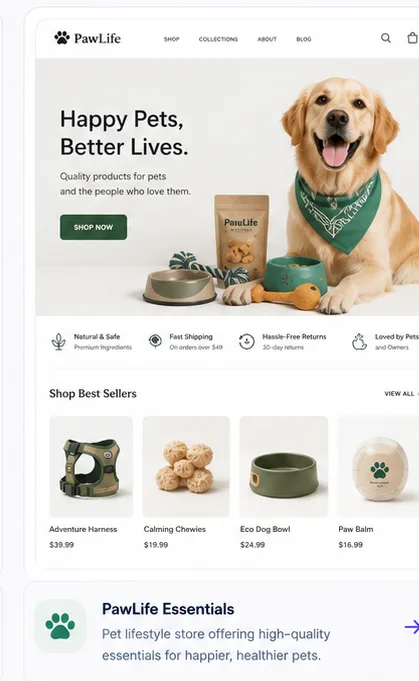
Pet Lifestyle Store
A playful store with repeat-purchase mechanics built in from day one.
View concept →
Like this direction?
Our consultant can review your goals, identify the right first phase, and prepare a tailored scope, timeline, and pricing plan. No payment required — human review before anything is final.
What the e-commerce planning process looks like
Every e-commerce engagement starts with a scoping call where we map your product catalogue, fulfilment setup, and existing tech stack. From there we produce a written roadmap covering platform recommendation (Shopify, WooCommerce, or headless depending on your volume and complexity), page architecture, navigation logic, and conversion priorities like cart recovery and trust-signal placement. We document the full feature list with honest build-time estimates so you can make budget decisions before any design work begins. Design concepts follow, showing real product layouts, mobile checkout flows, and how your brand translates to a storefront — not generic wireframes. Once direction is approved, development is scoped sprint by sprint with clear deliverables at each stage. You receive staging access throughout so nothing is a surprise at launch. Post-launch we provide a handover document covering admin tasks, analytics setup, and recommended next tests. The entire process is remote; all reviews happen over video calls and shared documents.
Honest guidance on scope, platforms, and pricing
E-commerce projects vary enormously in scope, so here is an honest breakdown of what typically drives cost and timeline. Platform choice matters: Shopify suits most product-based businesses launching or scaling, while WooCommerce makes sense if you need deep WordPress integration or unusual customisation. Headless builds offer performance advantages but add significant development complexity and ongoing maintenance overhead — worth it for high-volume stores, rarely worth it otherwise. On pricing, a well-configured Shopify store with custom theme work, app integrations, and a structured product catalogue typically falls in the mid-four-figures to low-five-figures range depending on product count, custom functionality, and migration needs. Ongoing costs — platform fees, app subscriptions, ad spend — should be budgeted separately from build cost. Our roadmap process maps your specific requirements before any build begins, so you get a scoped plan rather than a surprise invoice. We will tell you clearly if your goals exceed your budget before work starts.
Reviewed and updated September 12, 2026