Portfolio / Full-Stack Solutions
Full-Stack Solutions
Some businesses need the whole machine: planning tools, client portals, operations dashboards, and marketing — designed as one connected system instead of stitched-together parts.
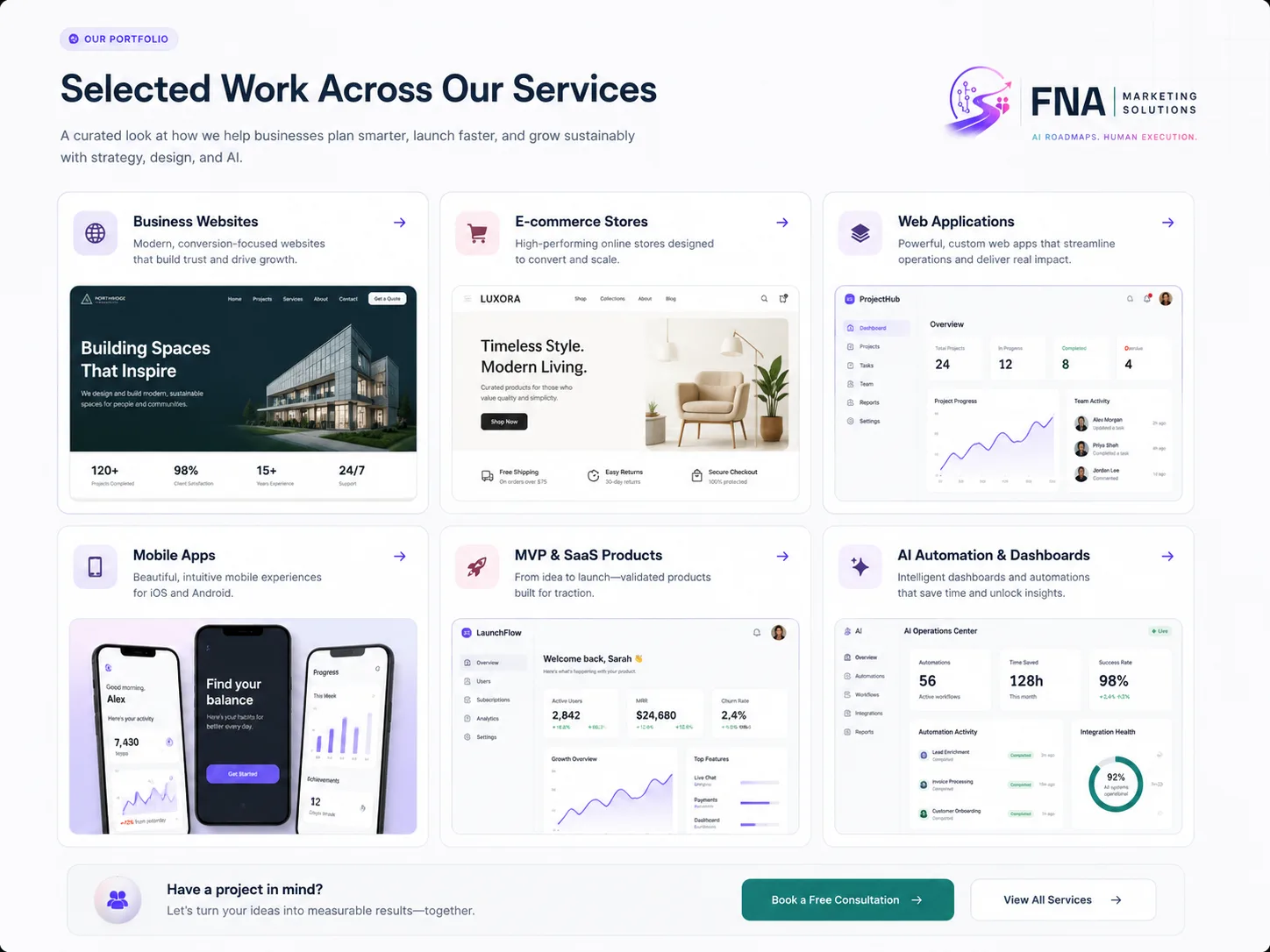
Selected concept work demonstrating the types of digital experiences we can plan and build. Final strategy, design, features, scope, timeline, and pricing are tailored to each client.
Concept directions
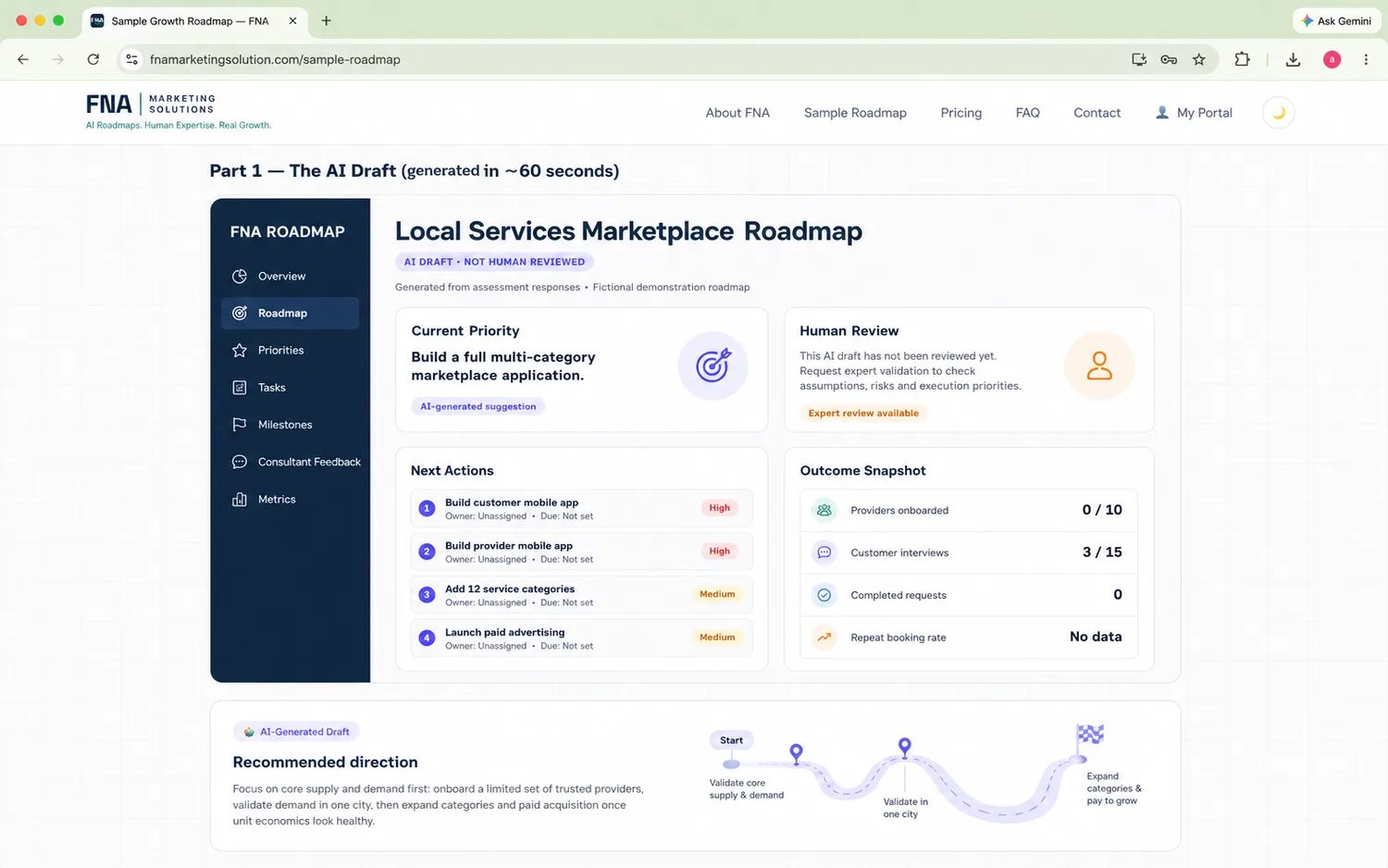 Concept Project
AI Roadmap & Planning Portal
A branded portal where prospects self-serve an AI-drafted project plan — and convert into consultations.
View concept →
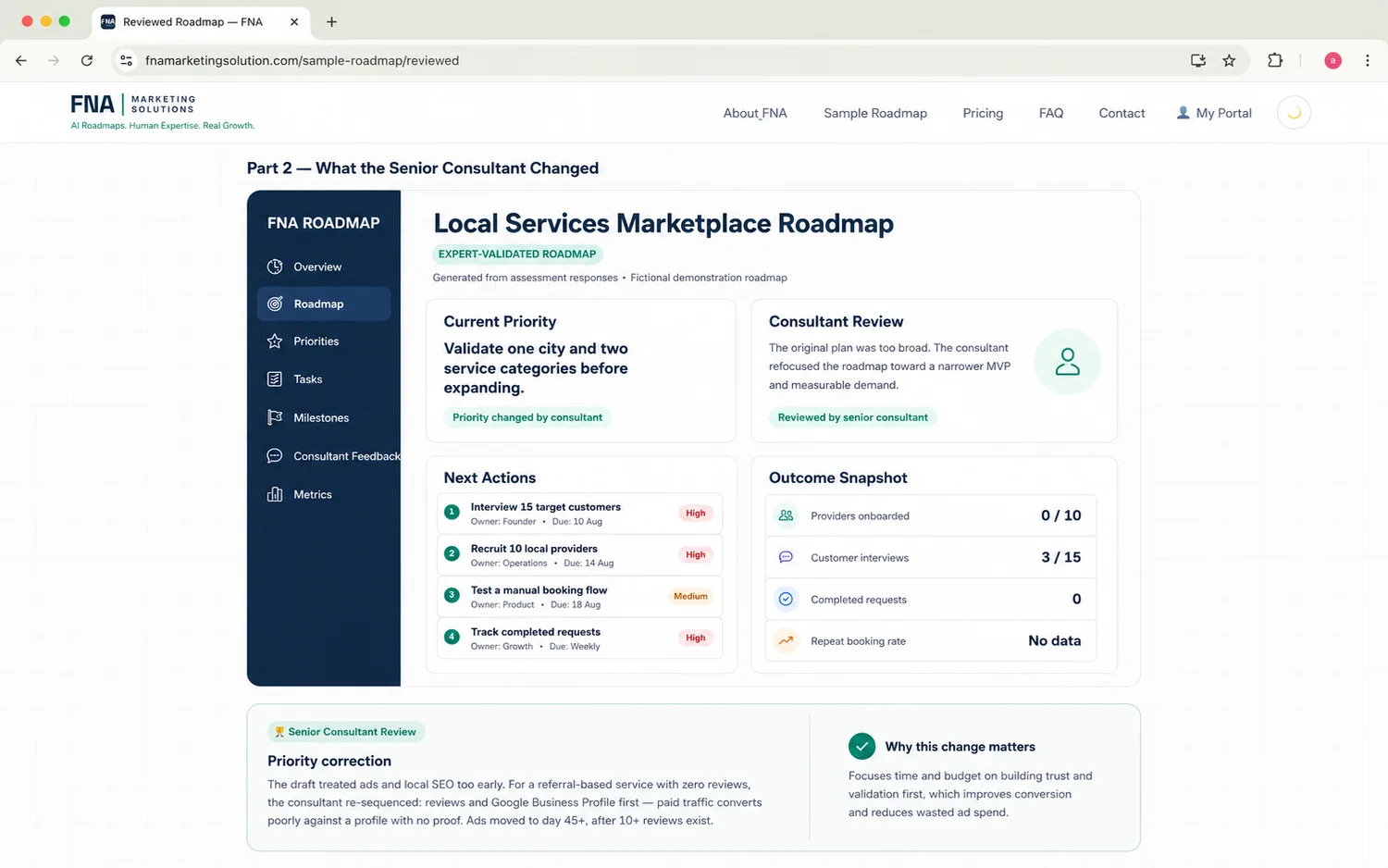 Concept Project
Consultant-Reviewed Execution Dashboard
Delivery workspace where every plan carries human sign-off — milestones, approvals, payments, progress.
View concept →
Concept ProjectCross-Platform Solutions Suite
Website, portal, mobile touchpoints and dashboards designed as one system with shared data and design.
View concept →
Like this direction?
Our consultant can review your goals, identify the right first phase, and prepare a tailored scope, timeline, and pricing plan. No payment required — human review before anything is final.
What a full-stack engagement typically includes
A full-stack engagement usually begins with a discovery and scoping phase: we map your existing tools, data flows, and user journeys to identify gaps and redundancies before writing a line of code or a single campaign brief. From there, a typical project spans several interconnected workstreams — a client-facing portal or app, an internal operations dashboard, marketing automation tied to real user behavior, and analytics instrumentation so you can see what's working. Each workstream is planned in an AI-assisted roadmap, then reviewed and refined by a human strategist before build begins. Deliverables vary by project but commonly include architecture diagrams, wireframes, a phased build plan, and documented handoff materials. Because these engagements touch product, operations, and marketing simultaneously, timelines are longer and scopes are larger than single-service work — most full-stack projects are scoped over multiple conversations before pricing is confirmed. If you have an existing system you need to extend rather than replace, that's a common starting point too.
How we scope and price a connected platform
Every connected platform engagement starts with a scoping call where we map your actual workflows — what data moves where, who needs access to what, and where manual steps are creating bottlenecks. From that conversation we produce a written scope document covering proposed architecture, module list, integration points, and a phased delivery plan. Pricing depends on three main variables: the number of distinct user roles (client-facing vs. internal admin vs. reporting-only), the complexity of third-party integrations (CRMs, payment processors, data feeds), and whether AI-assisted features are included. Simpler portals with one or two roles and minimal integrations sit at a different investment level than multi-tenant platforms with automated workflows. We provide itemised estimates so you can see exactly what each component costs and make informed decisions about phasing or descoping. There are no retainer lock-ins on project work — scope, timeline, and total price are agreed in writing before any build begins.
Reviewed and updated September 5, 2026