Portfolio / MVP & SaaS
MVP & SaaS
The right MVP proves demand with the smallest honest product — then grows into subscriptions, onboarding, and analytics.
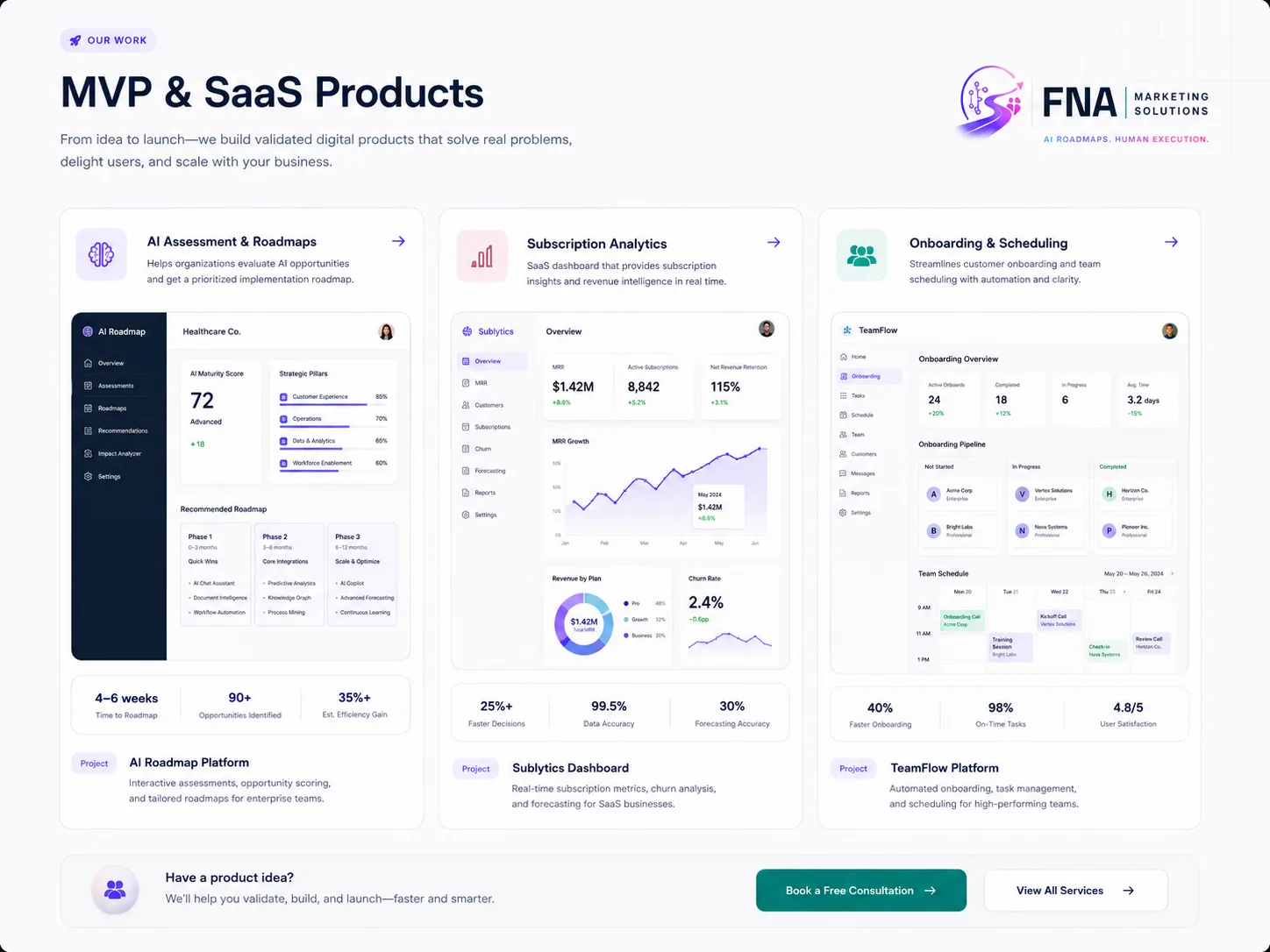
Selected concept work demonstrating the types of digital experiences we can plan and build. Final strategy, design, features, scope, timeline, and pricing are tailored to each client.
Concept directions
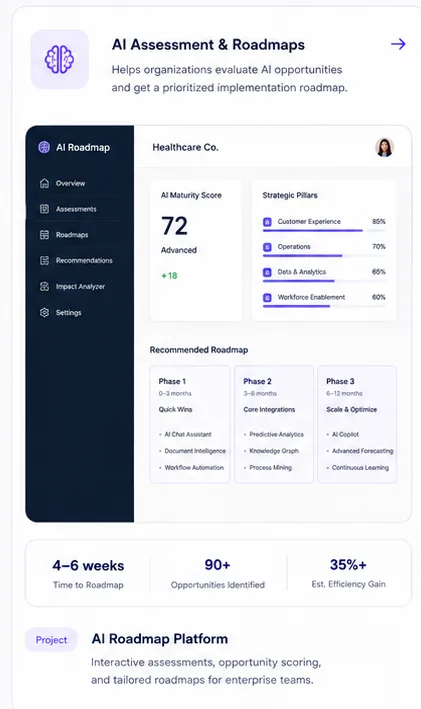 Concept Project
AI Assessment & Roadmap Platform
Turn expertise into a product: guided assessments that output structured, reviewable plans.
View concept →
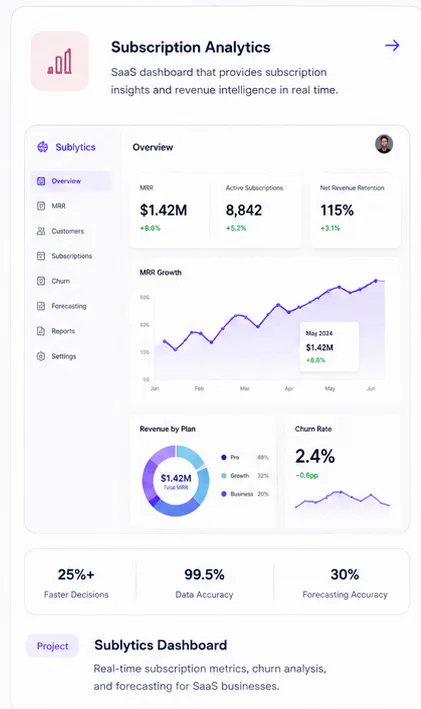 Concept Project
Subscription Analytics Platform
MRR, churn, and cohort truth for founders who outgrew the billing dashboard.
View concept →
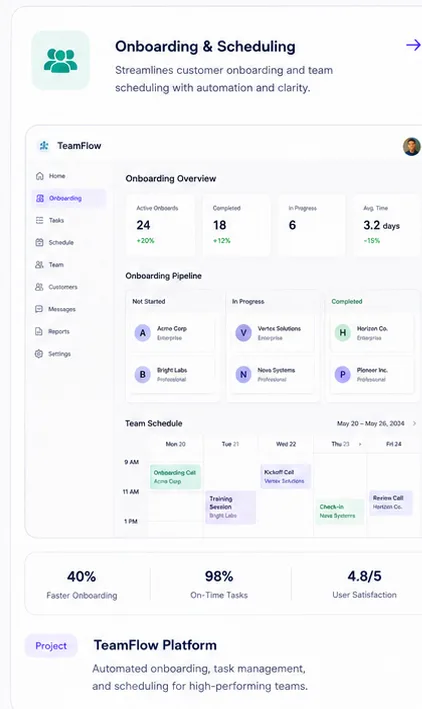 Concept Project
Onboarding & Scheduling Platform
Client intake, scheduling, and kickoff — one link instead of eleven emails.
View concept →
Like this direction?
Our consultant can review your goals, identify the right first phase, and prepare a tailored scope, timeline, and pricing plan. No payment required — human review before anything is final.
What MVP concept work actually includes
MVP concept work at FNA covers the planning and design layer before a single line of production code is written. That typically means: a written scope document defining the one core problem your product solves and the minimum feature set required to test it; wireframes or annotated screen flows showing how a user moves from signup to first value; a subscription or pricing model recommendation with rationale; an onboarding sequence outline so early users don't churn before they understand the product; and a basic analytics plan identifying which two or three metrics will tell you whether the MVP is working. We also flag scope-creep risks — features that feel essential but can safely wait for version two. What you receive is a concrete, reviewable plan you can hand to a development team or use to brief investors. Actual build timelines, costs, and feature decisions depend on your specific idea, audience, and budget, which we work through together before any work begins.
How to know if your idea is ready to scope
A few honest signals that your idea is ready to move from conversation to scoping: you can describe the single problem it solves in one sentence, you know who specifically has that problem (not 'everyone'), and you have at least informal evidence they'd pay for a solution — a waitlist, a lost sale, a recurring complaint you've heard more than twice. On the technical side, you should have a rough sense of whether you need a database, user accounts, or third-party integrations, even if you don't know how to build them. If you're still deciding between three different core features, that's a sign to do one more round of customer conversations before scoping begins. Scoping a moving target wastes your budget and ours. When you arrive with a clear problem, a defined user, and at least one constraint (budget, timeline, or must-have feature), we can produce a scope document that's actually useful rather than a placeholder full of assumptions.
Reviewed and updated September 8, 2026