Portfolio / Web Applications
Web Applications
When spreadsheets and group chats stop scaling, a purpose-built application with roles, workflows, and reporting takes over.
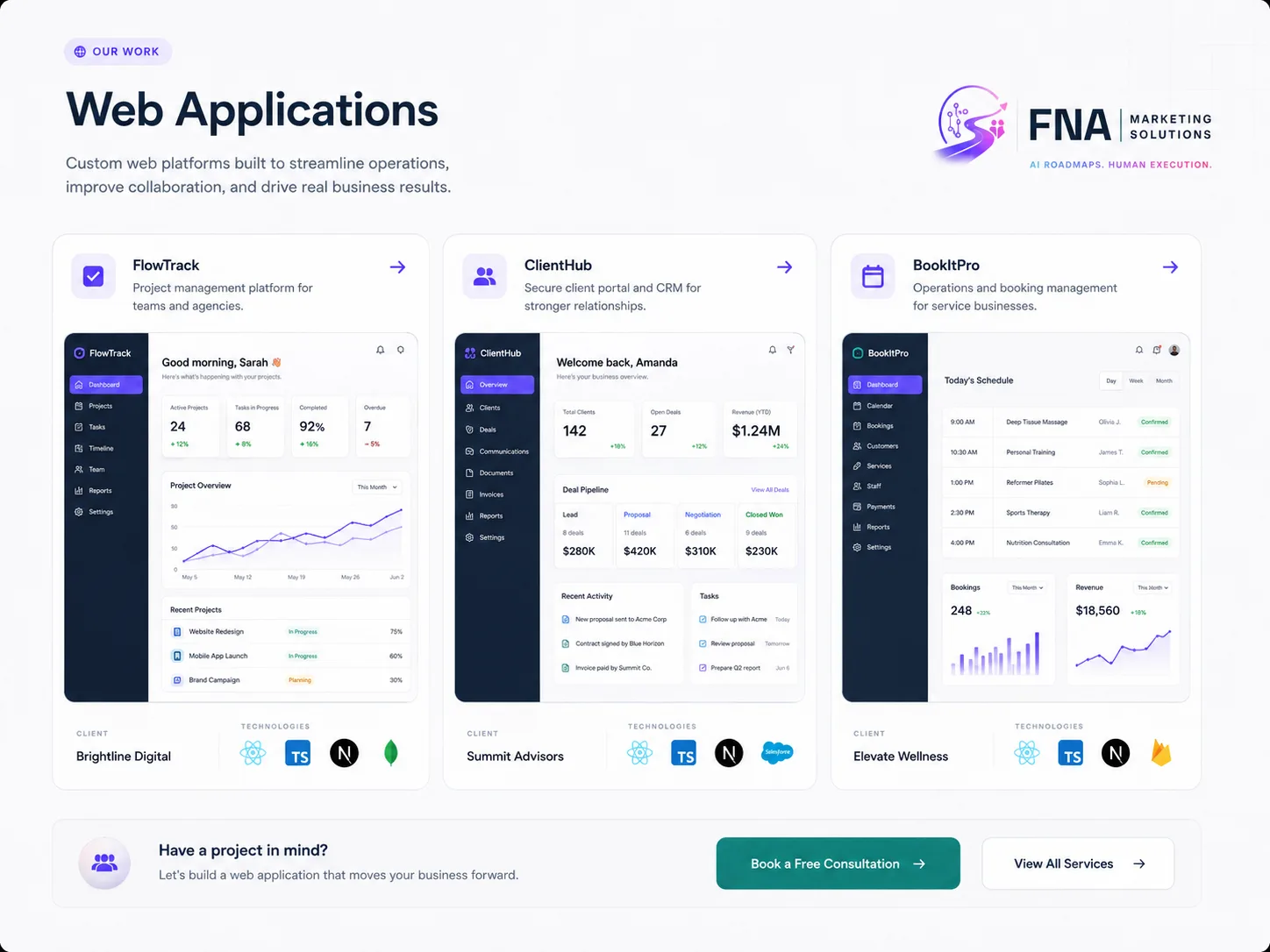
Selected concept work demonstrating the types of digital experiences we can plan and build. Final strategy, design, features, scope, timeline, and pricing are tailored to each client.
Concept directions
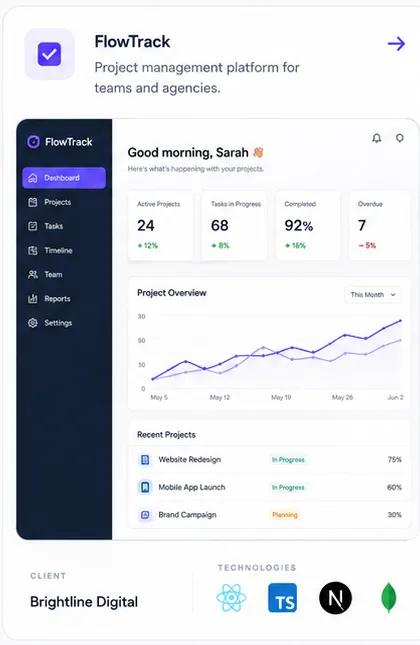 Concept Project
Project Management Platform
A delivery workspace with milestones, tasks, approvals, and client visibility.
View concept →
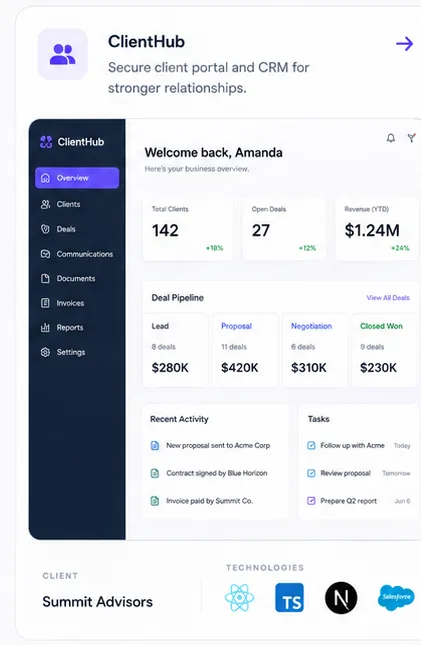 Concept Project
Client Portal & CRM
One login where clients see proposals, progress, files, payments — and you see the pipeline.
View concept →
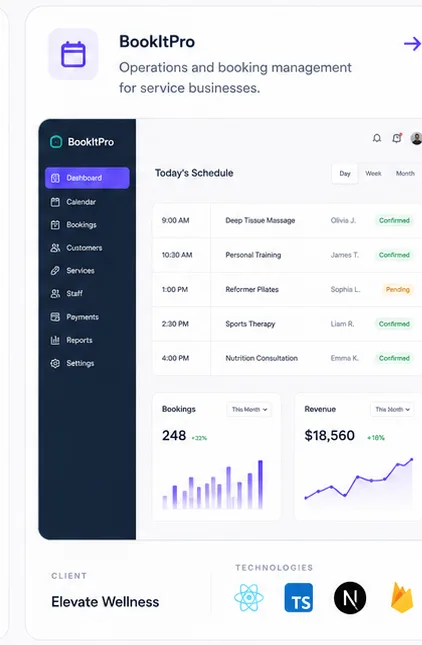 Concept Project
Booking & Operations Platform
Scheduling, dispatch, and job tracking for teams that work in the real world.
View concept →
Like this direction?
Our consultant can review your goals, identify the right first phase, and prepare a tailored scope, timeline, and pricing plan. No payment required — human review before anything is final.
What we build and how the process works
Web application development here means custom software that runs in the browser and solves a specific business problem — not a template site. Typical projects include internal dashboards that pull data from several systems into one view, client portals where customers log in to see their own information, workflow tools that replace spreadsheets and email chains, and AI automation that handles repetitive steps inside an existing process.
We start with a scoping phase: what the application must do, who uses it, what data it touches, and what already exists. AI helps us move quickly through requirements, wireframes and early prototypes, so you can react to something concrete instead of a long specification document. Senior consultants then review the plan for feasibility, data handling and scope before any build work begins.
Build happens in stages, so you see working software early and can adjust priorities as the product takes shape. We are a remote team working with US clients, and we keep scope, timelines and trade-offs explicit rather than buried. If you are unsure whether you need a full application or a smaller tool, the assessment is a reasonable first step.
Frequently asked questions
How long does a custom web application take to build?
It depends on scope. A focused internal tool or dashboard is a much shorter build than a multi-role client portal with integrations. We scope in stages and aim to get a working version in front of you early, then extend it. We give you a realistic timeline after the scoping phase rather than guessing before we understand the requirements.
Can you add AI automation to an application we already have?
Often, yes. We review the existing system, identify where automation genuinely saves time — document handling, routing, summarisation, data entry — and plan the integration around your current stack. Where an existing tool already covers the need, we will say so instead of rebuilding it.
Do you work with clients outside your area?
Yes. FNA works remotely with US clients, so location is not a constraint. Projects run through scheduled calls, shared documents and staged reviews, which keeps decisions visible even without in-person meetings.
Related
Reviewed and updated October 23, 2026