Portfolio / AI Automation
AI Automation
Automation earns its keep by returning hours: AI-assisted follow-ups, document processing, and dashboards with human approval where it matters.
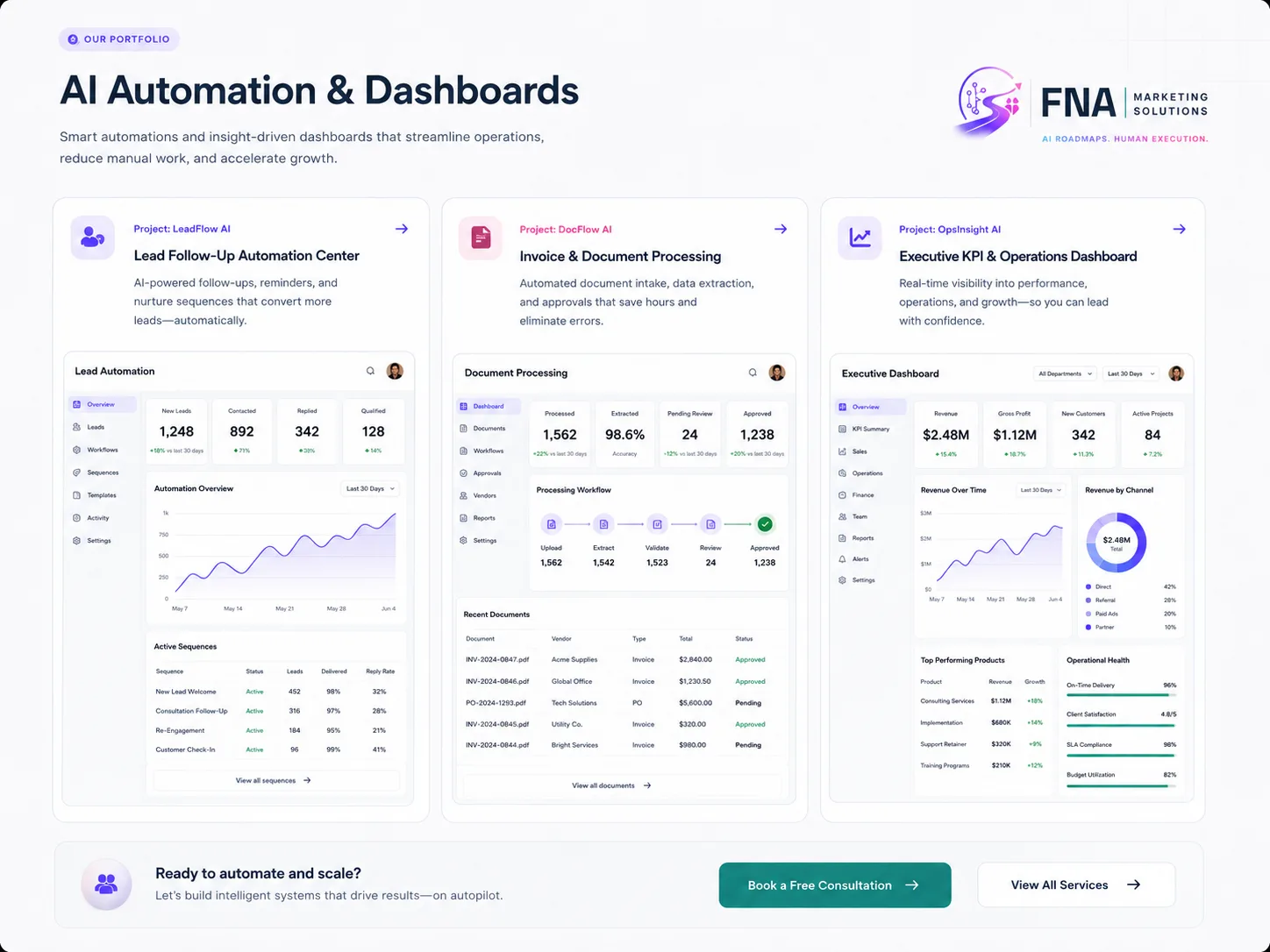
Selected concept work demonstrating the types of digital experiences we can plan and build. Final strategy, design, features, scope, timeline, and pricing are tailored to each client.
Concept directions
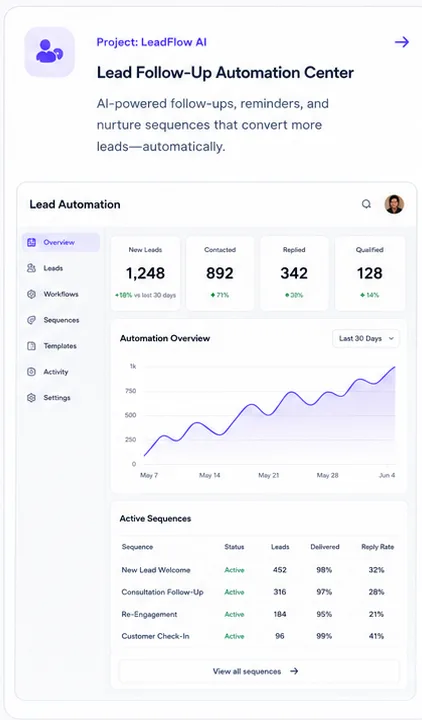 Concept Project
Lead Follow-Up Automation Center
Every lead answered in minutes — AI drafts, humans approve, nothing slips.
View concept →
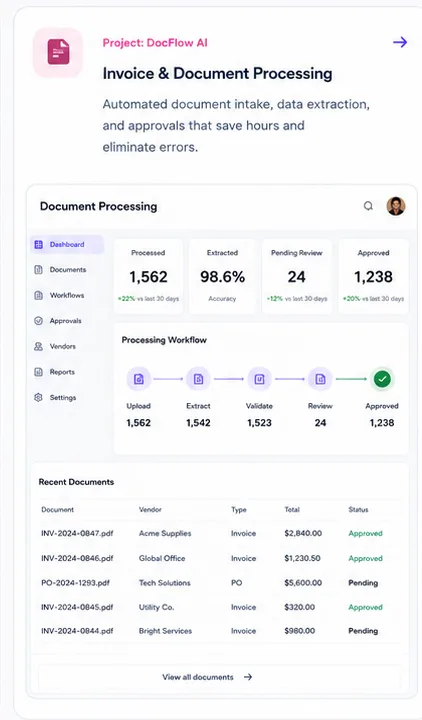 Concept Project
Invoice & Document Processing
Documents in, structured data out — with a human check exactly where it matters.
View concept →
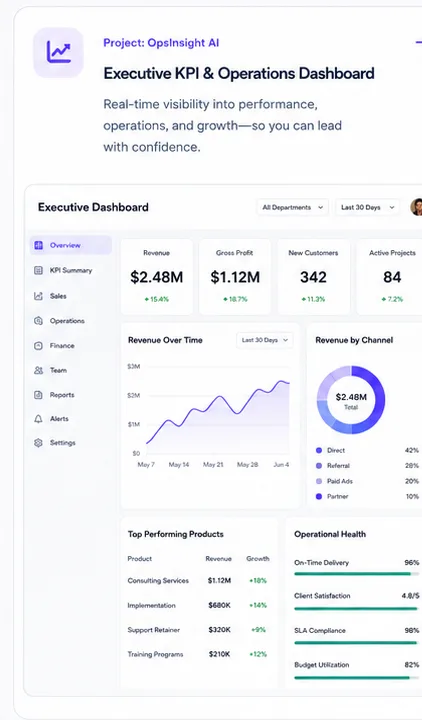 Concept Project
Executive KPI & Operations Dashboard
One trustworthy screen for the numbers that run the business — with AI notes on what moved.
View concept →
Like this direction?
Our consultant can review your goals, identify the right first phase, and prepare a tailored scope, timeline, and pricing plan. No payment required — human review before anything is final.
What the build process looks like, step by step
Every automation project starts with a scoping call where we map your current workflow on paper — what triggers an action, who approves it, and where things fall through the cracks. From that we produce a written automation brief: the exact trigger, the logic branches, the approval gates, and the tools involved (typically n8n, Make, or native CRM automations). You review and sign off before any build begins. Development happens in a staging environment so your live operations are never interrupted. We test each branch of the logic manually, then run it against real sample data you provide. Once you're satisfied, we deploy, document every step in plain language, and walk your team through it live. You receive a handoff document covering how to pause, edit, or extend the automation yourself. Post-launch, we monitor for errors during an agreed stabilisation period and fix anything that breaks at no additional charge. Scope changes requested after sign-off are quoted separately and transparently before work begins.
Honest guidance on scope, cost, and what automation can't fix
Automation saves real time on repetitive, rule-based tasks — routing leads, sending follow-up sequences, extracting data from documents, populating dashboards. It works best when your underlying process is already clear and consistent. If the process is broken or undefined, automating it just produces broken results faster.
Scope and cost vary significantly. A single Zapier or Make workflow connecting two tools might take a few hours. A custom AI agent with approval logic, error handling, and CRM integration is a multi-week project. We scope each engagement individually after understanding your actual workflow — we won't quote a number before we understand the problem.
What automation can't fix: a weak offer, an unclear sales process, or a team that won't adopt new tools. We'll tell you honestly if automation isn't the right lever for your situation. Sometimes the answer is a better spreadsheet or a clearer handoff process — and we'd rather say that upfront than sell you a build you don't need.
How we decide what to automate first
We start by mapping where work actually stalls, not where tools are most exciting. That means listing each recurring task, who touches it, how long it takes, and what happens when it is wrong. From there we rank candidates on three things: frequency, how rule-based the steps are, and the cost of a mistake. High-frequency, rule-based, low-risk tasks move first — things like routing inbound leads, drafting follow-ups for review, or extracting fields from documents. Anything with legal, financial, or reputational exposure keeps a human approval step until the error rate is proven. We also flag what automation will not fix: unclear ownership, missing data, or a process nobody has agreed on. Automating a broken workflow just makes it break faster. You get a shortlist with effort, dependencies, and expected time returned, so you can decide what is worth doing now versus later.
Common questions before you commit to an automation build
<h2>Common questions before you commit to an automation build</h2><p>What does an automation build actually cost? It depends on scope: a single follow-up workflow is a smaller project than a multi-step document pipeline with approval gates. We scope in writing before you commit, so you see the line items.</p><p>How long until it runs? Simple workflows can go live in weeks; integrations across several systems take longer. We sequence the highest-value step first so you see results early.</p><p>What if the AI gets it wrong? We design human-approval checkpoints for anything customer-facing or financially sensitive. You decide which steps run automatically and which wait for a person.</p><p>What can't automation fix? Broken processes, unclear ownership, and bad data. We'll tell you when the honest answer is to fix the process first.</p>
Project summaries: problem, build, and result
Each summary below follows the same structure: the problem the client brought us, what we built, and what changed afterward. We describe the build in concrete terms — which steps were automated, where a human still approves, and which systems were connected — so you can judge whether the approach fits your own workflow. Results are reported as the client measured them; where a client has not approved sharing figures, we say so rather than estimate. These are summaries of delivered work, not concept mockups, and we do not publish client names or logos without permission. If a project resembles yours, the summary should tell you enough to decide whether a call is worth your time. Where we have not yet completed work in a specific industry or tool, we will tell you that directly instead of implying experience we do not have.
Book a free strategy call about your automation build
If you are weighing an automation build, the free strategy call is where we scope it honestly. Bring the workflow that is costing you the most time — lead follow-up, document intake, reporting, or handoffs between tools — and we will walk through what a first version would look like, which steps need human approval, and what we would leave manual on purpose. You will leave with a clear picture of scope, a realistic cost range, and the sequence we would automate in, whether or not you hire us. We will also tell you plainly when automation is the wrong fix for a process that needs a simpler change first. No pressure and no obligation: the call is a working session, not a pitch. Use the booking form to pick a time, and note the workflow you want to discuss so we can prepare.
Reviewed and updated October 22, 2026